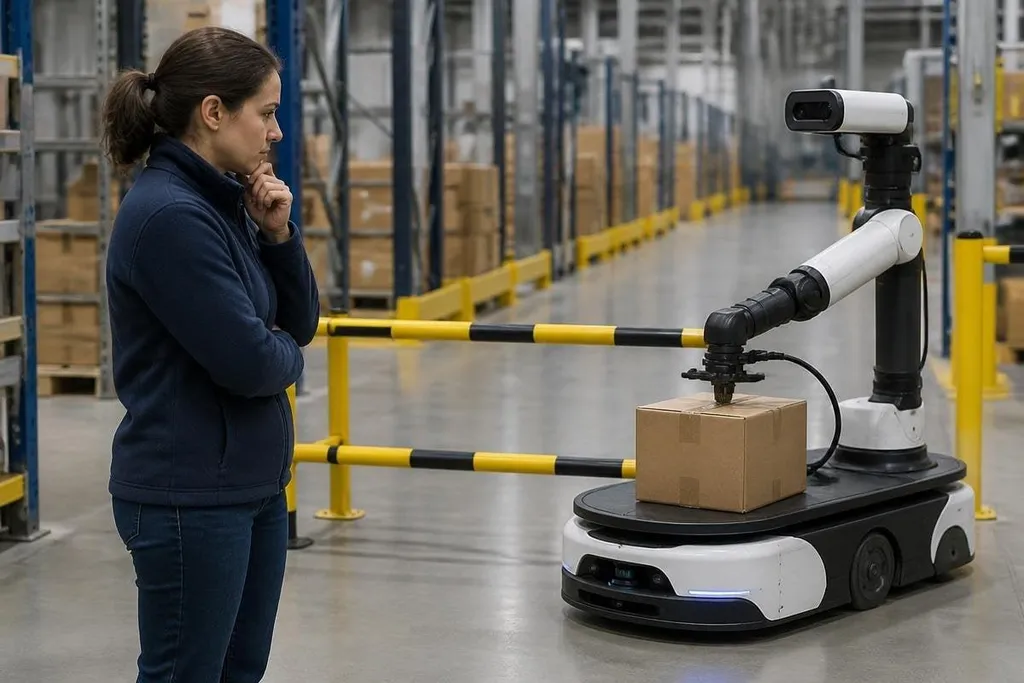
A robot can stop, change its route, or reject an object without showing why. When that choice affects a worker, a production line, or a delivery, a working result isn't enough. People need a reason they can check.
- Clear reasons for robot actions
- Faster checks when a task fails
- Better records for safety and review
What explainable AI means in a robot
Explainable AI gives people a view of how software reached a decision. In a robot, that view may connect sensor input, a detected object, a planned action, and the rule that caused the robot to choose it.
The explanation doesn't need to expose every line of code. A technician may need to know that a robot stopped because its camera saw a person inside a marked area. An engineer may need the sensor reading, confidence value, and time of the stop.
Those are different needs. A short reason helps an operator act. More detail helps a team check the system after an event.
Why the reason changes the work
When a robot stops without context, people are left guessing. They may reset the system, move an object, change the lighting, or call for help without knowing which action fits the fault.
An explanation narrows that search. If the system records that a gripper lost contact during a lift, the team can inspect the grip, the object, or the force reading instead of checking the whole cell.
This matters most when the robot works near people or handles costly goods. A record of the decision can also help a safety review distinguish a sensor problem from a planning choice.
A readable reason helps only when you can compare it with the robot’s sensor data, task, and stop rules. Robot decision reports from Robot24.com can tie that explanation to a named machine and test setting, which leads to the limits of explainability.
Explainability has limits
A reason can be clear and still be incomplete. A robot might report that an object was outside its trained range, but that message won't tell the team whether the problem came from glare, a new shape, a blocked camera, or weak training data.
The explanation also needs to match the real decision.
A label added after the action can sound useful while hiding the steps that led to it. Teams should check whether the recorded reason comes from the model, the motion planner, a safety controller, or a human operator.
This is where plain records matter. Store the sensor inputs used for the decision, the software version, the selected action, and the reason for any stop when the system can do so safely and legally.
Explainability can also expose a design problem. If operators cannot understand the reason without specialist software, the system may need a better interface rather than a longer technical report.
What to ask before deployment
Use this checklist when reviewing a robot that makes decisions with machine learning:
- Name the decision the system must explain, such as stopping, picking, or rerouting.
- Set the audience for each explanation: operator, technician, safety lead, or auditor.
- Record the input, software version, action, and reason at the moment of the decision.
- Test explanations against known faults, including blocked sensors and unfamiliar objects.
- Give people a safe way to pause the task and request a human review.
A useful explanation should help someone choose the next safe action. If it only repeats the outcome, it has added text without adding control.
The practical test
Ask one operator to use the explanation during a fault, without help from the software team. If they can identify the likely cause and the next safe check, the explanation is doing useful work. If they still have to guess, the robot needs a clearer record or a better reason.
I'd require that test before treating explainability as a finished feature. The open question for many robot systems is simple: can the person beside the machine act on the reason before the next decision arrives?